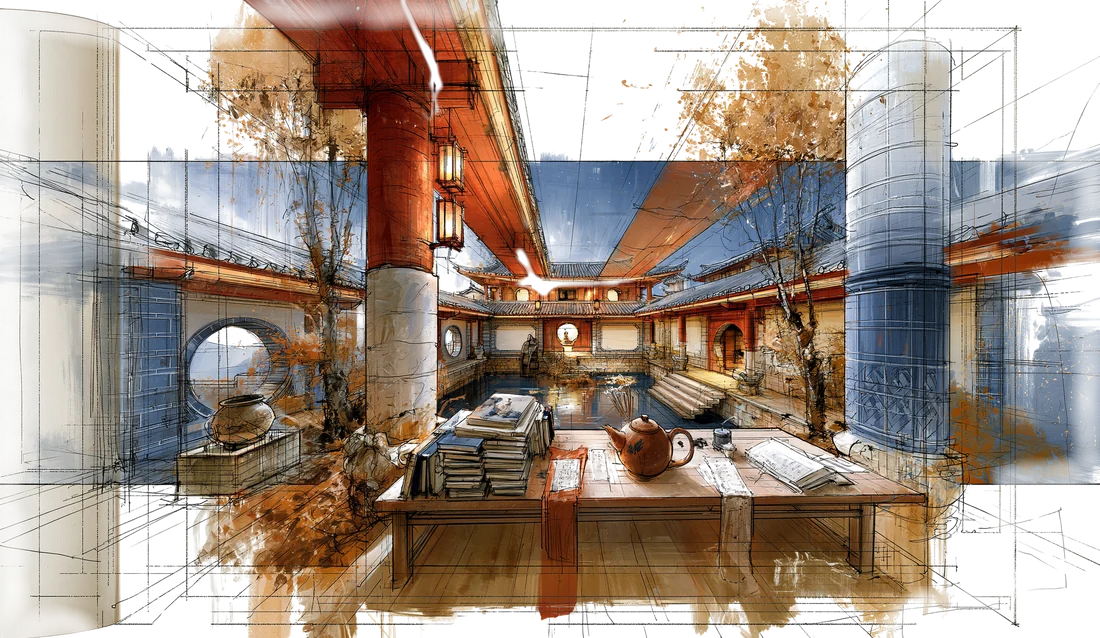
A short shelf of books and films that hold up — for the flight to Dali, the Day 3 / Day 4 car rides, or the post-trip debrief. None of these are required. All of them are useful.
Books
Forgotten Kingdom — Peter Goullart (1955)
A White Russian botanist's memoir of his nine years in Lijiang from 1939 to 1949 — the last decade of the Naxi old order before the Communist revolution. Goullart was a friend of Joseph Rock and an outsider deeply embedded in pre-revolutionary Naxi society. The book is dated in some of its colonial-era language, but it is one of the only first-person accounts of pre-modern Lijiang in English, and the descriptions of Dongba shamans, caravan culture, and Mu family politics are vivid and rare.
Why read it: to see Lijiang as it was before tourism, before paved roads, before electricity reached most of the Old Town. The contrast with what you'll walk through on Day 5 is the value.
The Tea Horse Road — Michael Freeman & Selena Ahmed (2011)
A photo-led history-and-anthropology book on the Yunnan–Tibet trade route. Heavy on the visual; readable in a single sitting. Ahmed is an ethnobotanist who studied Yunnan tea cultivation; Freeman is a photographer who's done long-term work in the region. Together they trace the road's history, the surviving caravan culture, and the tea itself.
Why read it: it's the single best introduction to the trade-network framework that organizes this whole trip. Pair with the Tea Horse Road primer section.
Country Driving or Oracle Bones — Peter Hessler
Hessler's three China books (River Town, Oracle Bones, Country Driving) form the definitive Western journalistic account of China in the 2000s. Either Oracle Bones (essayistic, broader) or Country Driving (more on rural transformation) gives you the macro context that surrounds Yunnan without being specifically about it.
Why read it: not Yunnan-specific, but Hessler is the writer who makes provincial China legible to outsiders better than anyone else. If you've never read him, you're missing the best China-explainer of our era.
The Ancient Tea Horse Road — documentary (CCTV, 2010)
A six-part Chinese documentary series with English subtitles, often findable on YouTube (VPN required from inside China). Heavy on archival footage and interviews with surviving muleteers. Six hours total — overkill for the trip, but if you want to nerd out on the road before June, this is the most comprehensive resource.
Why watch it: the muleteer interviews are irreplaceable. The last generation of people who walked the road as working professionals is dying out, and a lot of this footage is now historical record.
A specialist note on Dongba script
If you're interested in Dongba script specifically:
The Naxi–English Encyclopaedic Dictionary by Joseph F. Rock (1963–1972) is the definitive Western reference. Two volumes, ~1,400 pages. Library-only — most copies are in university East Asian collections. If you have access to the Princeton, Harvard, or Yale East Asian Library, you can spend an afternoon with it before the trip. The opening pages give you ~50 high-frequency glyphs with full ritual context. It's a primary source disguised as a reference book.
If you don't have library access, He Limin's Naxi Pictographs (smaller, more recent, still substantive) is sometimes available secondhand online.
Films and music
- The Story of the Weeping Camel (2003) — Not Yunnan, but Mongolia; the closest filmic analogue to Bai/Naxi rural pastoral life
- Lijiang Ancient Music Orchestra recordings — search "Naxi ancient music" on Spotify or Apple Music. The orchestra preserves Tang and Song dynasty court music that was lost everywhere else in China during the Cultural Revolution.
- Wong Kar-wai's Ashes of Time — filmed partly in northwest Yunnan; not historical, but the landscape is recognizable
A short read for the flight
If you read nothing else: search for recent long-form journalism on "the last Dongba shamans" or "Lijiang Dongba" — the New York Times, The Guardian, and China Daily have all published 2,000–4,000-word features on the surviving Dongba practitioners in the past few years. Any of them is a solid 20-minute read for the BJS→DLU flight.