The Mogao Caves (莫高窟) outside Dunhuang are the single most important stop on the trip, and one of the great art sites of the world. Plan for them properly and they're unforgettable; turn up without a booking and you may not get in at all.
What they are
Mogao is a honeycomb of Buddhist cave-temples carved into a cliff face in the desert. Construction began in 366 CE and continued for a thousand years, through ten dynasties, as monks, merchants, and patrons paid for cave after cave to earn merit. The numbers are staggering: of 735 caves cut into the cliff, 492 are preserved with art — together holding roughly 45,000 square meters of murals and more than 2,000 painted clay sculptures (UNESCO).
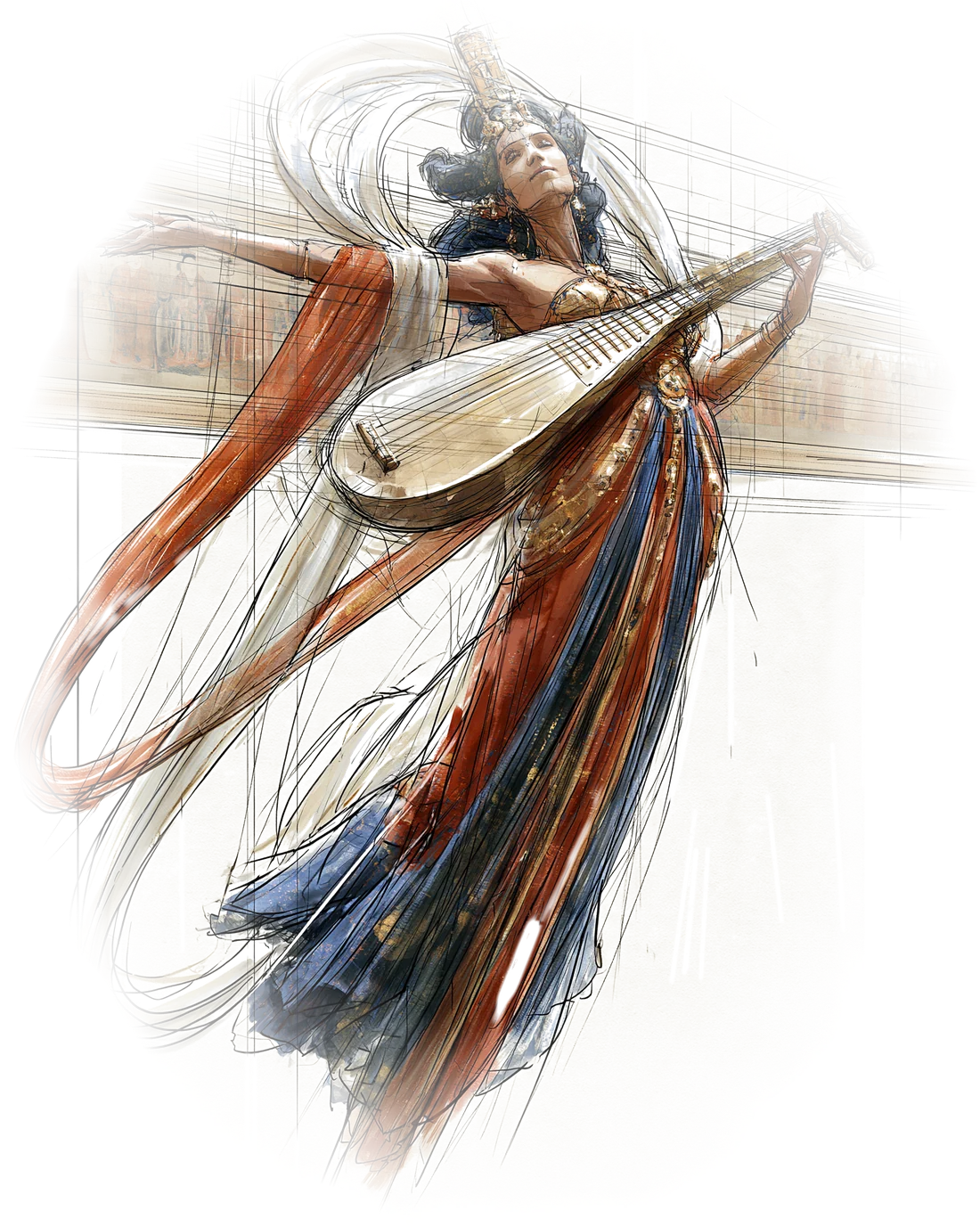
Because Dunhuang sat at the cultural crossroads of the Silk Road, the art is a thousand-year record of exchange: Indian and Central Asian influences in the early caves, full-flowered Tang-dynasty confidence in the middle ones, with flying apsaras (飞天), thousand-buddha walls, and vast paradise scenes. It is, in effect, the best-preserved library of medieval Buddhist art on Earth.
A thousand years of painting on a desert cliff — the richest surviving record of how Buddhism, and the world, moved along the Silk Road.
The Library Cave
In 1900, a caretaker monk named Wang Yuanlu broke through a wall and found a sealed chamber — the "Library Cave" — packed with some 50,000 manuscripts, paintings, and documents, sealed up around the 11th century and untouched for 900 years. Over the following years, Western explorers including Aurel Stein and Paul Pelliot carried tens of thousands of these items off to London, Paris, and beyond — a dispersal that remains a sore point, and that gave rise to the global scholarly field now called "Dunhuang studies" (敦煌学). The caves today are protected and researched by the Dunhuang Academy, a pioneer in heritage conservation.
How to visit — read this part
A standard visit is a guided circuit: two introductory films, then a guide leads your group through a rotating selection of about 8 caves (which caves are open changes to protect the art). It runs ~3.5–4 hours and finishes around midday. A few rules to expect: no photography inside the caves, no large bags or tripods, and no flash or torches — the murals are fragile and light damages them. Just look. It's enough.
The special caves
A handful of the very finest grottoes — the "special caves" (特窟) — are kept closed on the standard tour and sold separately. If you're serious about the art, they're the best thing you'll see. Tickets are sold on-site only, after the regular tour, at ¥150–200 per cave, with roughly 100 tickets per cave per day, first-come-first-served. Two caves add about 1–1.5 hours and ¥300–400 per person. Worth-it picks: Cave 45 (the peak of High-Tang painted sculpture), Cave 57 (the famously beautiful "Bodhisattva of Beauty"), and Cave 220 (a luminous Tang Bhaiṣajyaguru paradise).
After Mogao, the afternoon eases off: the Silk Road Heritage City film set is an unashamedly touristy but fun recreation of a caravan town, and the evening Shazhou Night Market is the city's social heart (more in the food section).
敦煌城外的莫高窟是这趟旅行中最重要的一站,也是世界上最伟大的艺术遗址之一。准备充分,它会让你终生难忘;不预约就去,你可能根本进不去。
它是什么
莫高窟是开凿在荒漠崖壁上、蜂巢般密集的佛教石窟寺。它始建于公元 366 年,此后持续开凿了一千年,历经十个朝代,僧人、商人和供养人为积功德,一窟接一窟地出资修建。数字令人咋舌:崖壁上开凿的 735 个洞窟中,有 492 个保存着壁画和彩塑,合计约 4.5 万平方米壁画和 2,000 多身彩塑(联合国教科文组织)。
由于敦煌地处丝绸之路的文化交汇点,这里的艺术就是一部千年交流史:早期洞窟带着印度和中亚的影响,中期洞窟则是盛唐的自信舒展,有飞天、千佛壁,还有宏大的经变画。实际上,这里就是地球上保存最完好的中古佛教艺术宝库。
一面荒漠崖壁上的千年绘画:关于佛教、也关于整个世界如何沿丝绸之路流动的最丰富的存世记录。
藏经洞
1900 年,看守洞窟的道士王圆箓打穿一面墙,发现了一间封闭的密室,也就是“藏经洞”,里面堆满了约 5 万件写本、绘画和文书,大约在 11 世纪被封存,此后 900 年无人触碰。此后若干年间,包括斯坦因和伯希和在内的西方探险家把其中数以万计的文物运往伦敦、巴黎等地。这段流散至今仍是一道伤疤,也催生了如今被称为敦煌学的国际学术领域。今天的洞窟由敦煌研究院负责保护和研究,它是文物保护领域的先行者。
怎么参观(这部分一定要读)
标准参观是讲解员带队的线路:先看两部介绍影片,然后讲解员带团参观轮换开放的约 8 个洞窟(开放哪几个窟会轮换,以保护壁画)。全程约 3.5–4 小时,中午前后结束。有几条规矩要有心理准备:洞窟内禁止拍照,不能带大包或三脚架,也不能用闪光灯或手电,壁画很脆弱,光线会损伤它们。只管用眼睛看,足够了。
特窟
最精华的少数几个洞窟,也就是特窟,不在标准线路中开放,需要另外购票。如果你认真想看艺术,这会是你看到的最好的东西。特窟票只在现场出售,并且要在常规参观结束后购买,每窟 ¥150–200,每窟每天约 100 张,先到先得。看两个窟大约多花 1–1.5 小时,每人 ¥300–400。值得选的是:第 45 窟(盛唐彩塑的巅峰)、第 57 窟(以“美人菩萨”闻名)和第 220 窟(光彩夺目的唐代药师经变)。
看完莫高窟,下午就轻松些:丝路遗产城影视基地是一处毫不掩饰的旅游景点,复原了一座商队古城,但挺好玩;晚上的沙洲夜市是全城的社交中心(详见饮食一篇)。