Practicalities · 4 min read实用信息 · 约 4 分钟
Eating New Zealand吃在新西兰
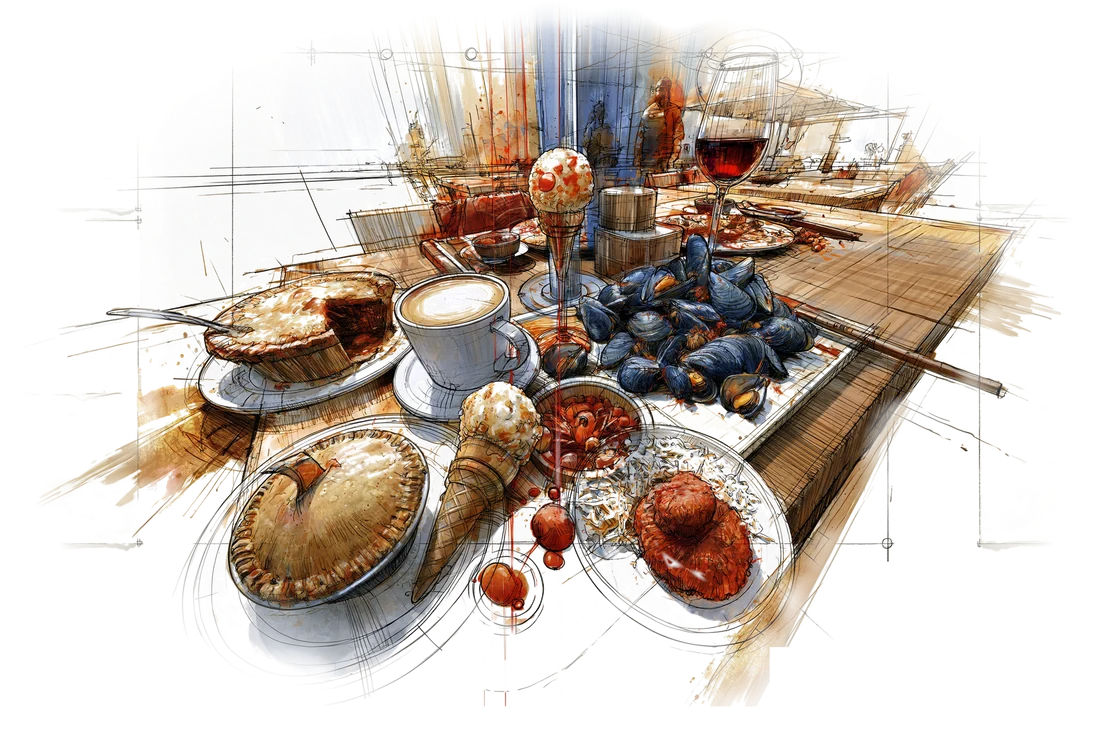
New Zealand food is built on a short list of excellent raw materials: grass-fed lamb and beef, dairy, cold-water seafood, and fruit and wine from a cool, sunny climate. Onto that British base, the country has layered Māori traditions, Pacific Island flavors and, especially in Auckland, a large Asian population. The everyday food is simple and unpretentious. The best of it is very good, and a few items are genuine national obsessions.
Coffee: the flat white
New Zealand takes coffee seriously, and even small towns tend to have a decent café. The national order is the flat white: a double shot of espresso with steamed milk that has only a thin layer of velvety microfoam, stronger and smaller than a latte. Whether it was invented in Wellington or Sydney in the 1980s is a long-running argument between the two countries. Wellington in particular is a café city, so the ferry arrival is a good excuse for a proper one. Other terms: a long black is an Americano made by pouring espresso over hot water, and a fluffy is frothed milk for small children, often with marshmallows.
Pies, burgers and the road-trip diet
- Meat pies. The unofficial road-trip food: a hand-sized pastry filled with minced beef and gravy, sold warm at every bakery, café and gas station. The classic is mince and cheese; steak and cheese, chicken, and bacon and egg are close behind. Bakeries compete in national pie awards, and a small-town bakery can easily beat a city café.
- Fergburger. Queenstown's cult burger shop began in 2001 as a late-night stand serving hungry skiers and backpackers, and now draws queues down Shotover Street almost around the clock. The burgers are enormous; the line moves faster than it looks. The bakery next door, Fergbaker, sells good pies and pastries if you'd rather skip the wait.
- Fish and chips. Wrapped in paper and eaten by the water, preferably with a view. Blue cod, found mainly around the South Island, is the prized fish.
Seafood
- Green-lipped mussels. Large mussels with a bright green edge to the shell, found only in New Zealand and farmed mainly in the Marlborough Sounds. Havelock, near Picton, calls itself the "green-shell mussel capital of the world." Steamed with white wine and garlic, they're a highlight near the ferry.
- Crayfish. Spiny rock lobster, kōura in Māori, and the meal that gave Kaikōura its name. Expensive, sold whole by weight, and worth it once.
- Pāua. New Zealand's abalone, with its shimmering blue-green shell sold as jewelry everywhere. The meat is tough, so it's usually minced into pāua fritters or sliced thinly. Harvesting is tightly controlled.
- Whitebait fritters. A West Coast specialty: tiny, translucent juvenile fish bound with egg and fried into a patty, eaten between slices of buttered white bread with a squeeze of lemon. The fishing season runs in spring (September to November), so in summer you'll eat frozen whitebait. It's still very good, and still expensive.
Māori and Pacific food
In Rotorua, try a hāngī: meat and vegetables slowly steamed in an earth oven. You'll also meet kūmara, the Māori sweet potato, roasted or as chips on menus everywhere. Rēwena bread, a sourdough leavened with a potato starter, is worth seeking out.
Wine
New Zealand makes only a small share of the world's wine, but its style is distinctive. Two regions line up with our route:
- Central Otago, around Queenstown, Wānaka and Cromwell, is among the southernmost wine regions in the world, with hot days, cold nights and schist soils. It's known for intense pinot noir. The Gibbston Valley, 20 minutes from Queenstown, has cellar doors (tasting rooms) along the gorge road.
- Marlborough, at the top of the South Island next to Picton, is by far the biggest region, making around three-quarters of the country's wine. Its sauvignon blanc, sharp and aromatic with notes of passionfruit and cut grass, put New Zealand wine on the world map in the 1980s.
With so much driving, tastings are for passengers. Designated drivers can ask for a non-alcoholic tasting or buy a bottle for the evening.
How eating out works
Many cafés use counter service: you order and pay at the counter, take a number and sit down. Tap water is free and safe, often brought to the table in a bottle. Tipping isn't expected; wages are relatively high and the price includes 15% GST (sales tax). Small kitchens close early outside the cities, often by 8:30 or 9 p.m., and some cafés close mid-afternoon, so in small towns plan dinner early. On public holidays, many cafés add a surcharge of around 15% to cover staff holiday pay.
And when you need a break from pies, Auckland has excellent Chinese food, especially along Dominion Road.
A mince-and-cheese pie from a gas station at 11 a.m. is not a compromise. It's the national lunch.
新西兰的吃食,底子是几样一流的原料:吃草长大的羊肉和牛肉、乳制品、冷水海鲜,还有凉爽而日照充足的气候里长出来的水果和葡萄酒。在英式饮食的底子上,又叠了毛利传统、太平洋岛国的风味,以及(尤其在奥克兰)人数众多的亚裔带来的各路菜系。日常饭食简单、不装腔作势;好的那一部分非常好,还有几样东西,是举国上下真心着迷的。
咖啡:馥芮白
新西兰人对咖啡很认真,小镇上也往往能找到一家像样的咖啡馆。国民点单是 flat white(馥芮白):双份浓缩,加上只打出薄薄一层丝滑奶泡的热牛奶,比拿铁更浓、杯子更小。它究竟是 20 世纪 80 年代在惠灵顿还是悉尼发明的,新澳两国争了几十年。惠灵顿尤其是座咖啡馆之城,下了渡轮,正好找个理由喝一杯正经的。另外几个词:long black 是把浓缩咖啡倒在热水上做成的美式;fluffy 是给小朋友的一杯奶泡,常配棉花糖。
肉派、汉堡和公路饮食
- 肉派。 自驾路上的非官方指定食物:巴掌大的酥皮派,里面是牛肉末和肉汁,面包房、咖啡馆、加油站都有,热乎乎地卖。经典款是牛肉芝士派(mince and cheese),牛排芝士、鸡肉、培根鸡蛋紧随其后。各家面包房会去参加全国肉派大赛,小镇面包房赢过城里咖啡馆是常有的事。
- Fergburger。 皇后镇这家汉堡店是个传奇,2001 年起家时只是个深夜档口,喂饱饿坏了的滑雪客和背包客,如今几乎全天候都在 Shotover 街上排起长队。汉堡个头巨大;队伍走得比看上去快。不想排队的话,隔壁的 Fergbaker 卖的肉派和酥点也很不错。
- 炸鱼薯条。 用纸一包,拿到水边吃,最好对着一片风景。蓝鳕鱼(blue cod)主要产在南岛周边,是最受追捧的鱼。
海鲜
- 青口贻贝。 个头很大,壳缘一圈亮绿色,是新西兰独有的物种,主要养殖在马尔堡峡湾。皮克顿附近的 Havelock 自称“世界青口贝之都”。白葡萄酒加蒜一蒸,是渡轮码头一带的一大亮点。
- 岩龙虾。 毛利语 kōura,凯库拉的地名就是从这一口来的。价格不菲,整只论重量卖,值得吃一次。
- 鲍鱼(pāua)。 新西兰的鲍鱼,壳是泛着光的蓝绿色,到处有人拿它做首饰卖。肉质偏韧,所以通常剁碎做成鲍鱼饼(pāua fritter),或者切成薄片。采捕管得很严。
- 银鱼饼。 西海岸的招牌:一小撮半透明的幼鱼,用鸡蛋一裹,煎成一块饼,夹在两片抹了黄油的白面包中间,挤点柠檬汁。捕捞季在春天(大约 9 月到 11 月),所以夏天吃到的是冷冻银鱼,照样好吃,照样贵。
毛利与太平洋风味
在罗托鲁瓦,试一顿 hāngī:肉和蔬菜在地灶里慢慢焖熟。菜单上还随处可见 kūmara,毛利红薯,烤着吃或者炸成薯条。rēwena 面包也值得找来尝尝,这是一种用土豆老面发酵的酸面包。
葡萄酒
新西兰产的葡萄酒只占全世界很小一部分,风格却很鲜明。有两个产区正好在我们的路线上:
- 中奥塔哥,在皇后镇、瓦纳卡和克伦威尔一带,是世界上最靠南的葡萄酒产区之一,白天热、夜里冷,土壤是片岩。这里以浓郁的黑皮诺出名。离皇后镇 20 分钟的 Gibbston 山谷,峡谷公路两边就是一家家酒庄的品酒室(cellar door)。
- 马尔堡,在南岛北端、紧挨皮克顿,是规模最大的产区,全国大约四分之三的葡萄酒出自这里。这里的长相思(sauvignon blanc)酸度爽利、香气张扬,带着百香果和青草的味道,20 世纪 80 年代让新西兰葡萄酒在世界上一炮而红。
路上开车多,品酒是乘客的事。开车的人可以要一份无酒精的品鉴,或者买一瓶留到晚上。
在外吃饭的门道
很多咖啡馆是柜台点单:在柜台点好、付钱,拿个号码牌,找位子坐下。自来水免费,可以直接喝,常常整瓶放到桌上。不用给小费,这里工资相对高,标价里也已经含了 15% 的消费税(GST)。出了大城市,厨房关得早,常常八点半、九点就不接单了,有些咖啡馆下午三四点就关门,所以在小镇上晚饭要趁早。公共假日里,很多咖啡馆会加收 15% 左右的附加费,用来付员工的假日工资。
吃肉派吃腻了的时候,奥克兰有非常好的中餐,Dominion Road 一带尤其多。
上午十一点在加油站买一个牛肉芝士派,不是将就。那是新西兰的国民午餐。
Where this shows up on the trip行程里对应的日子